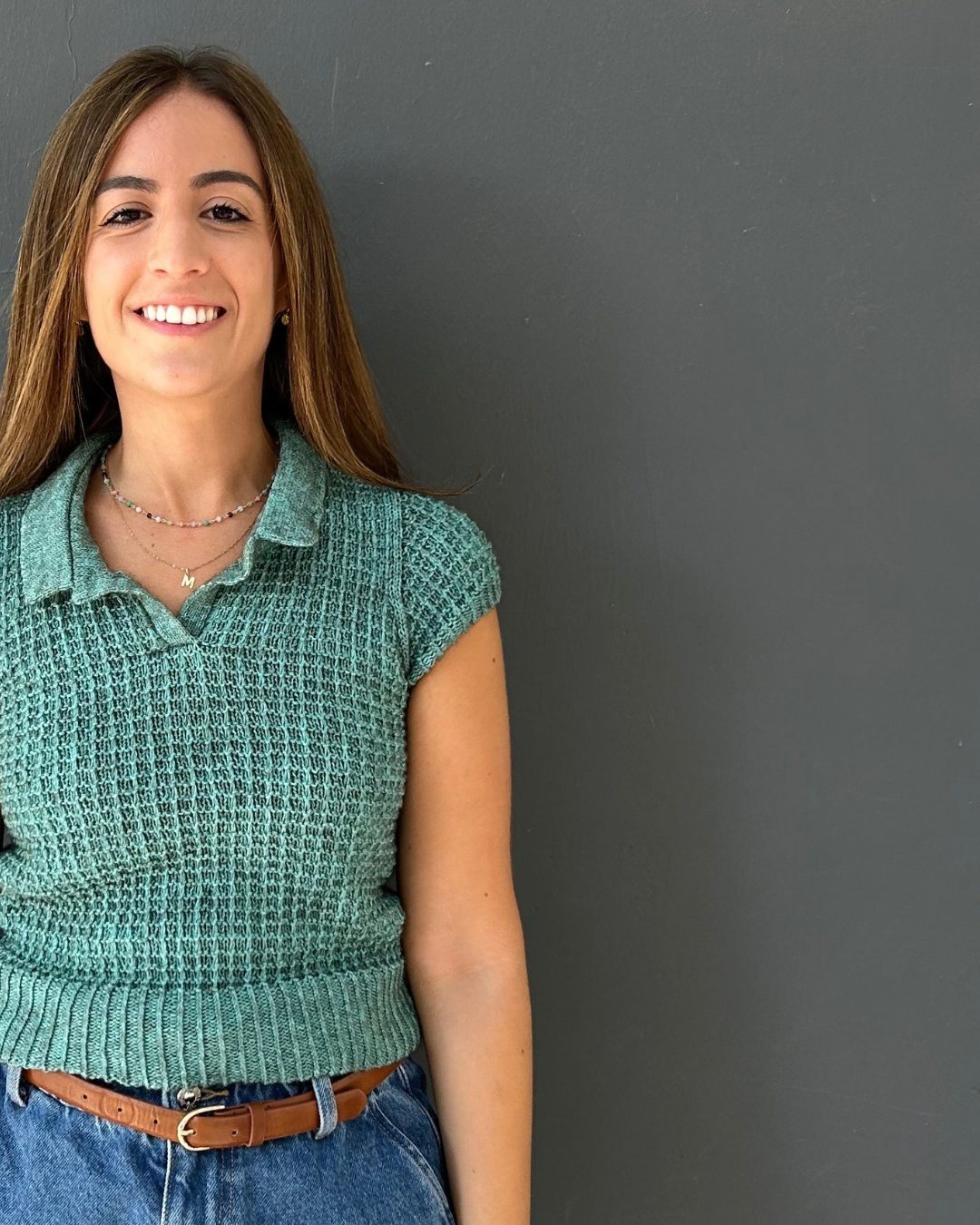
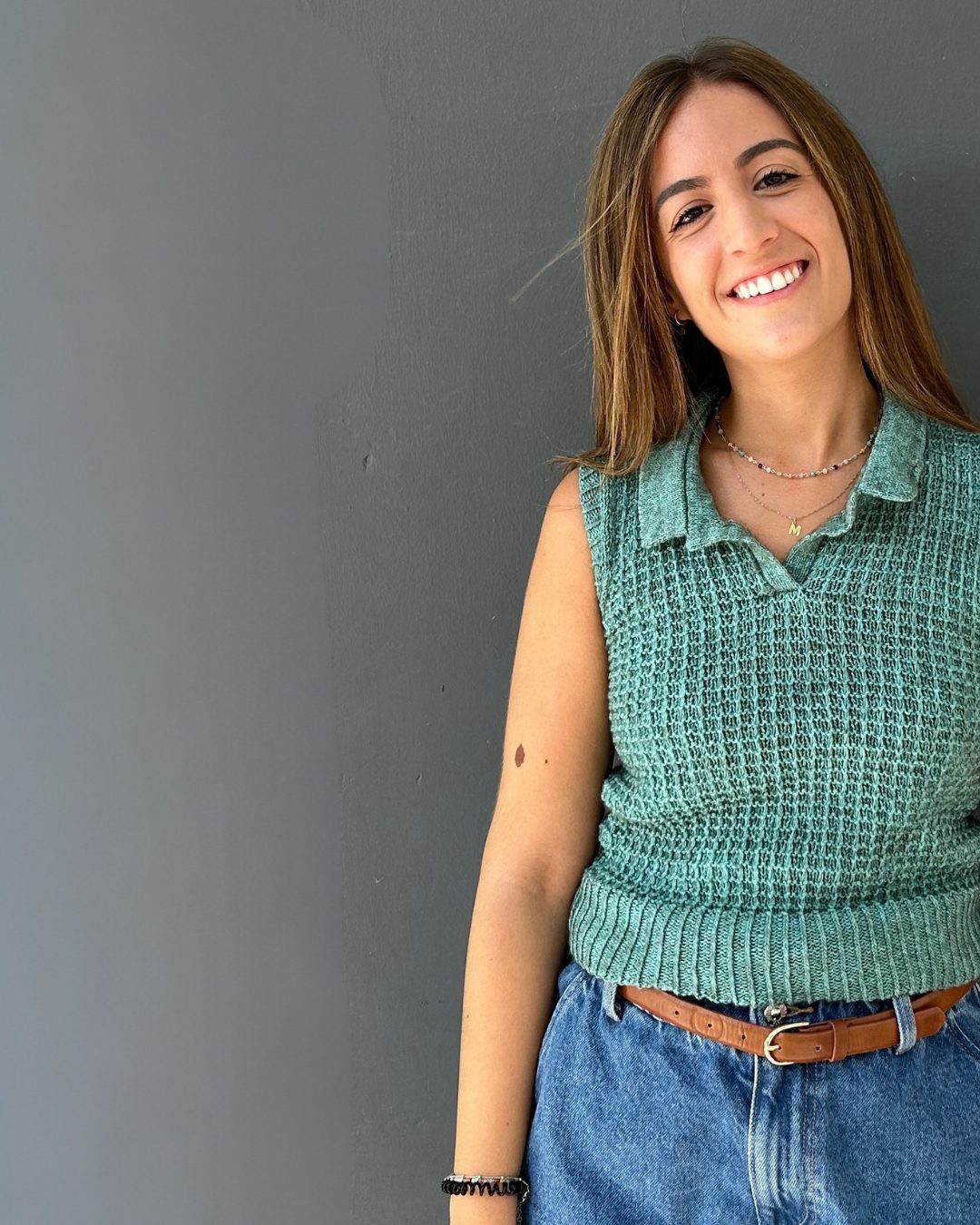
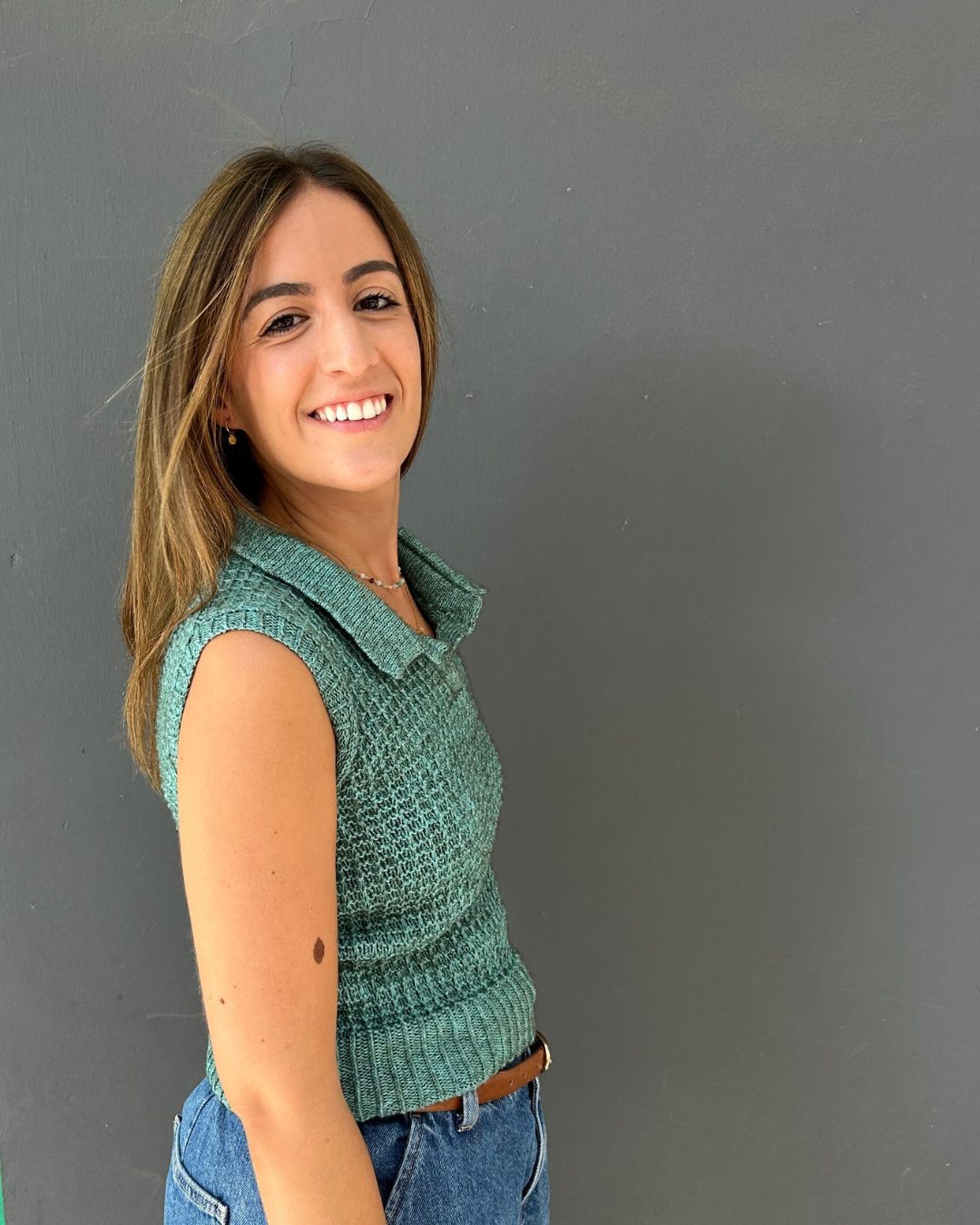
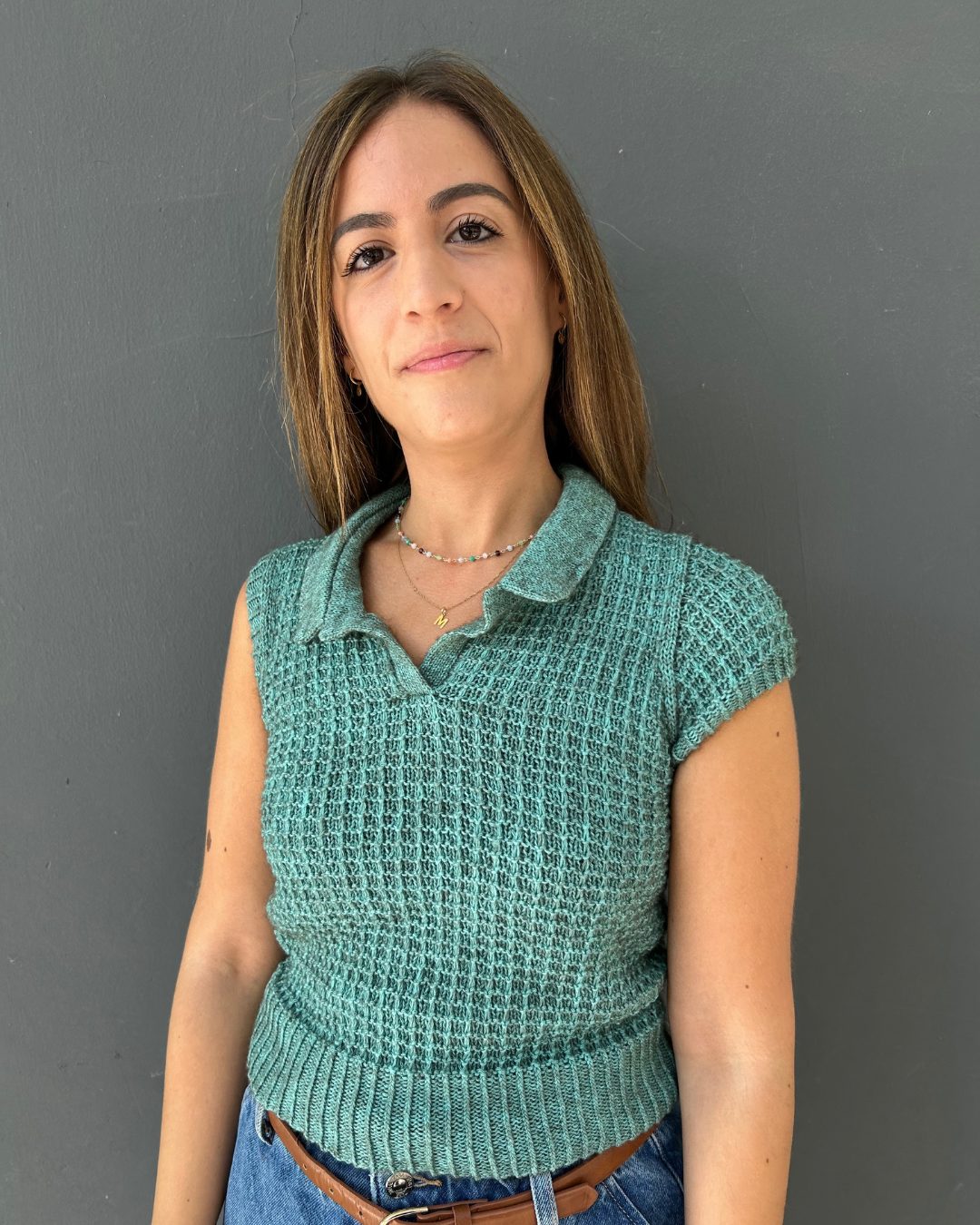
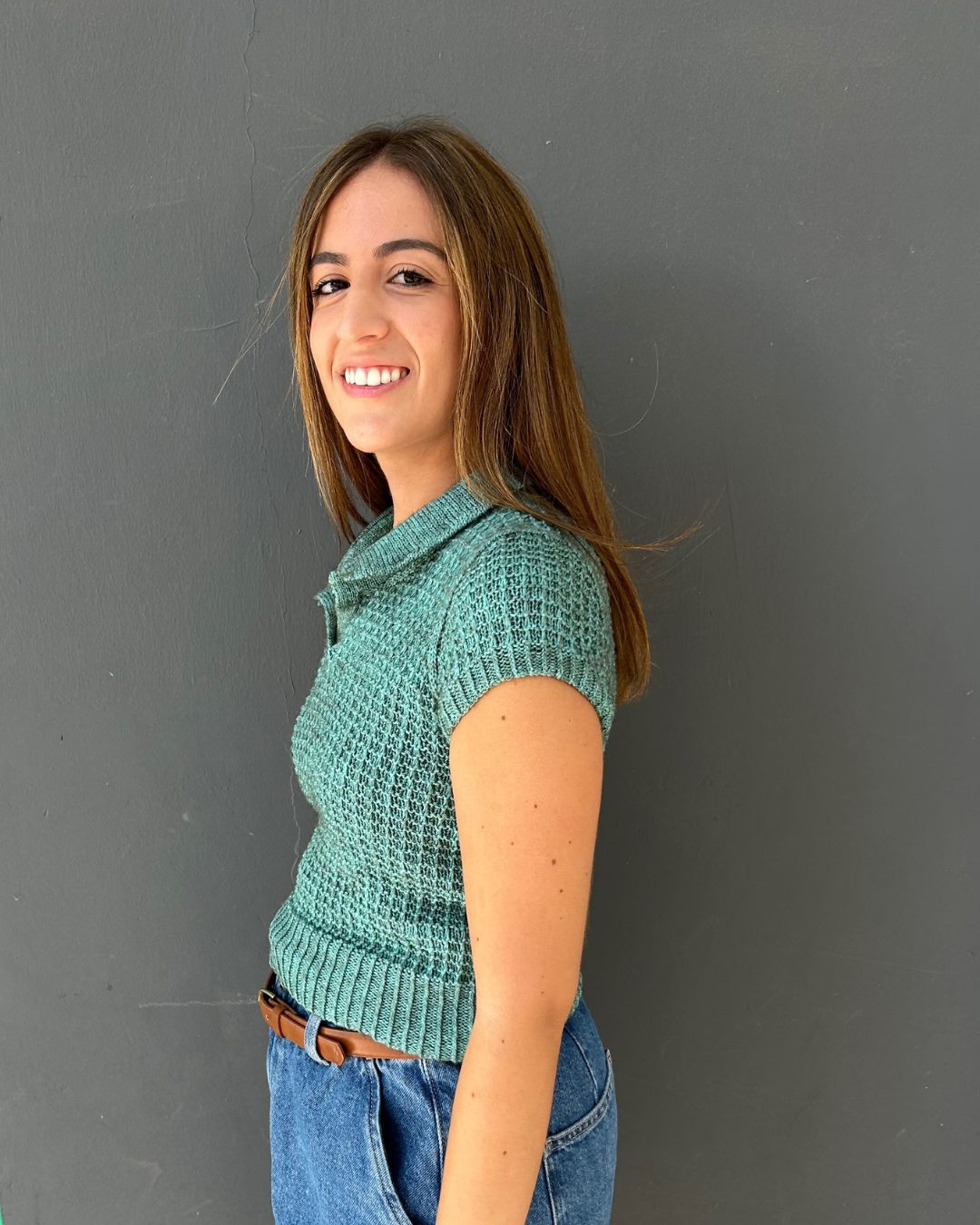
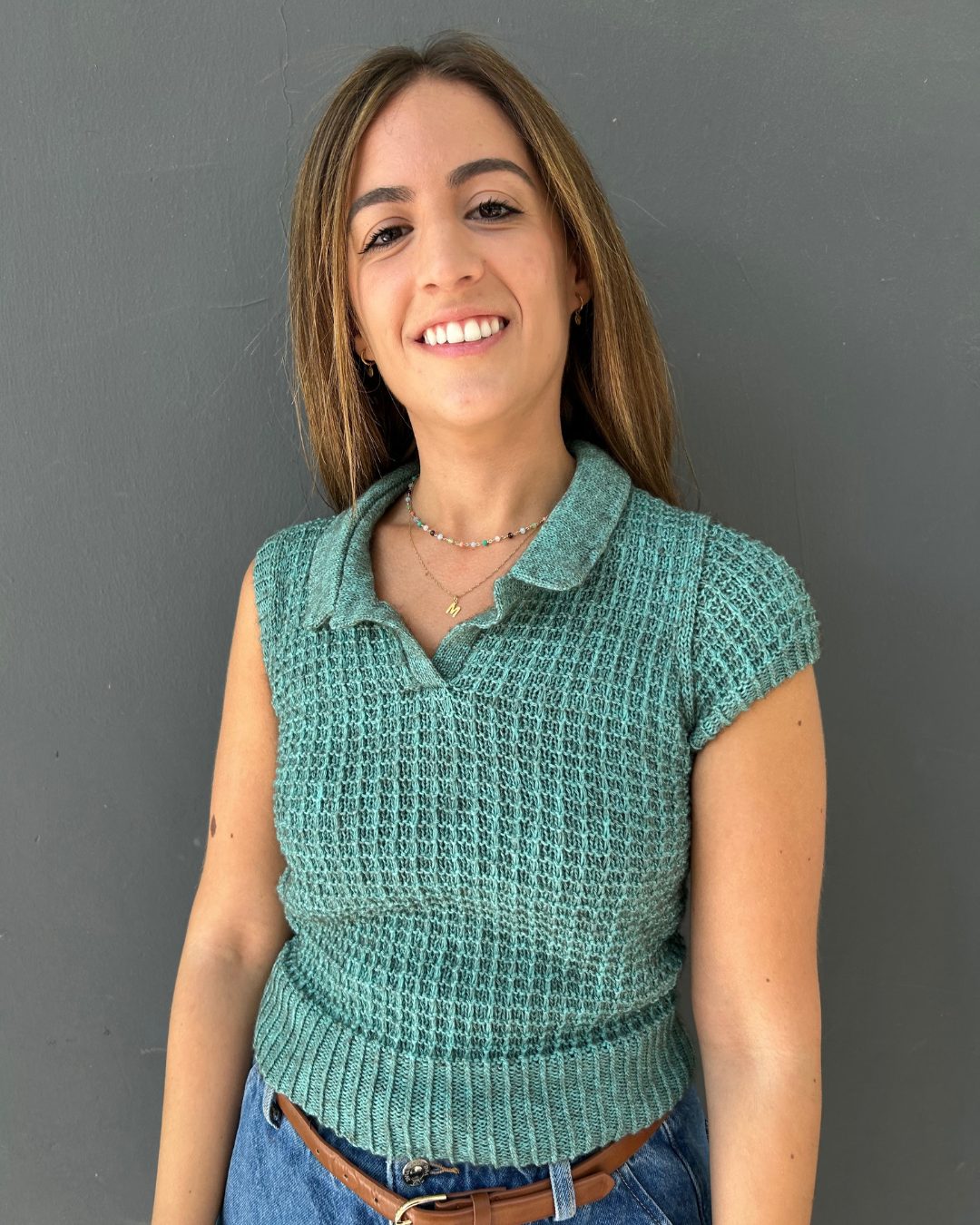
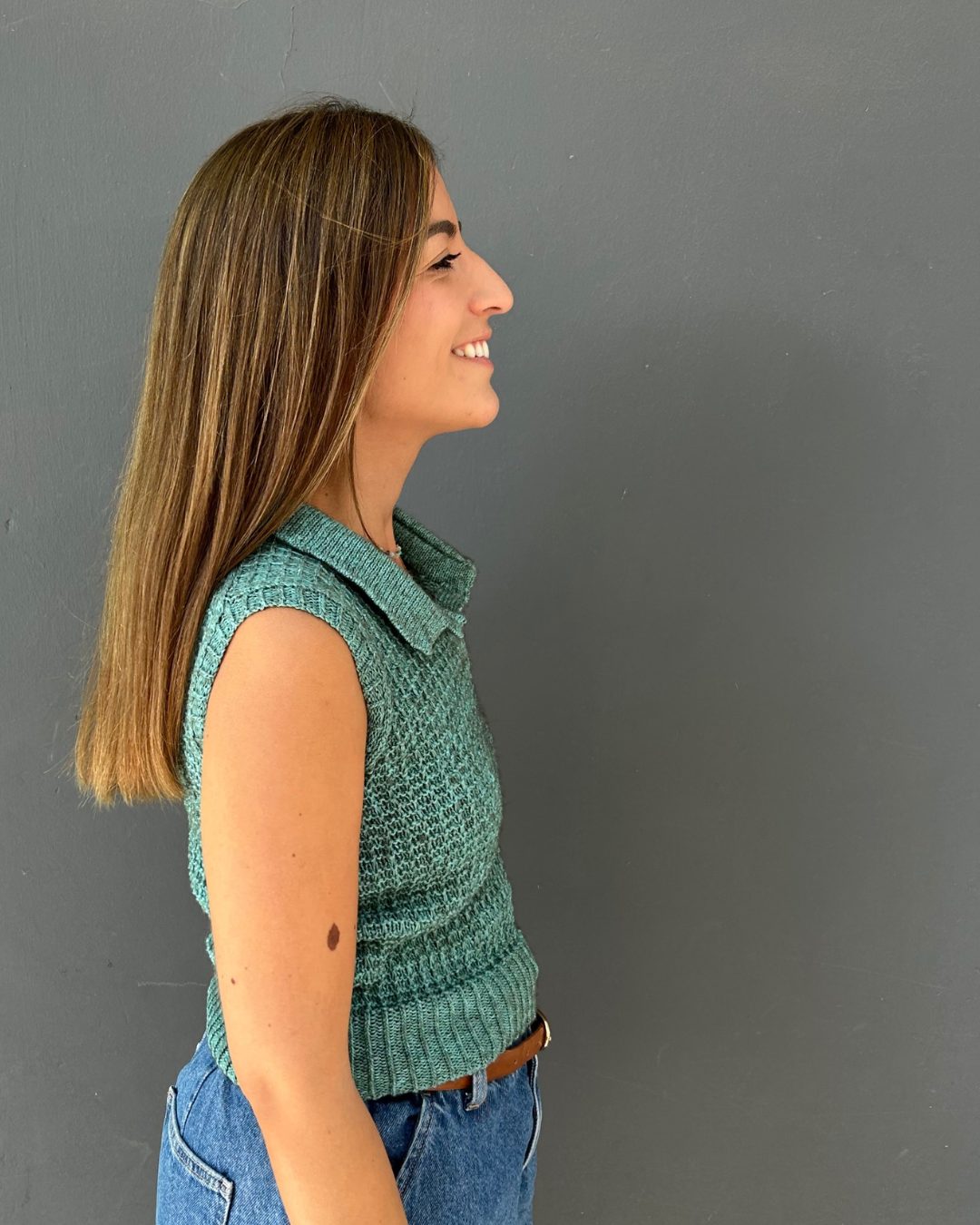
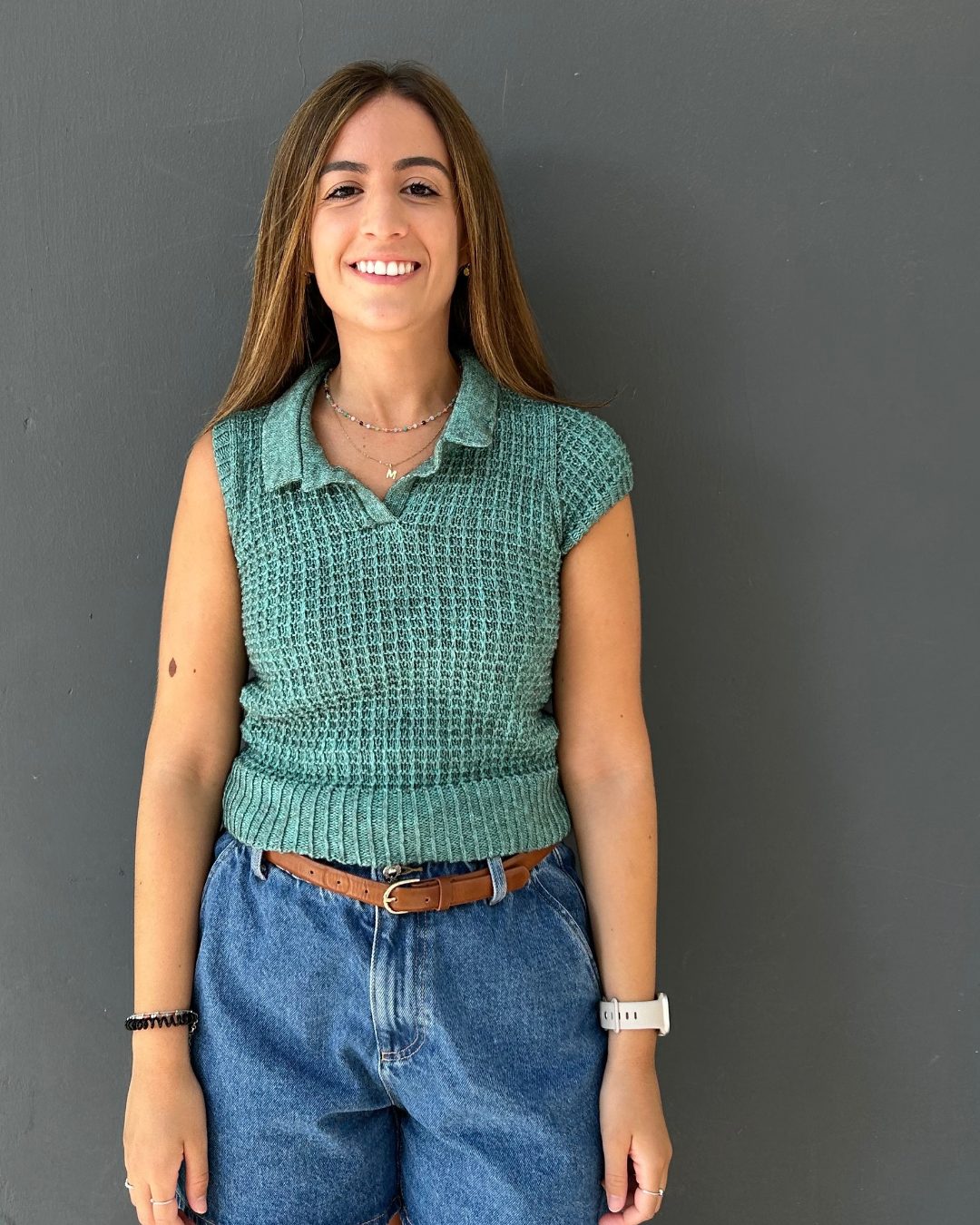
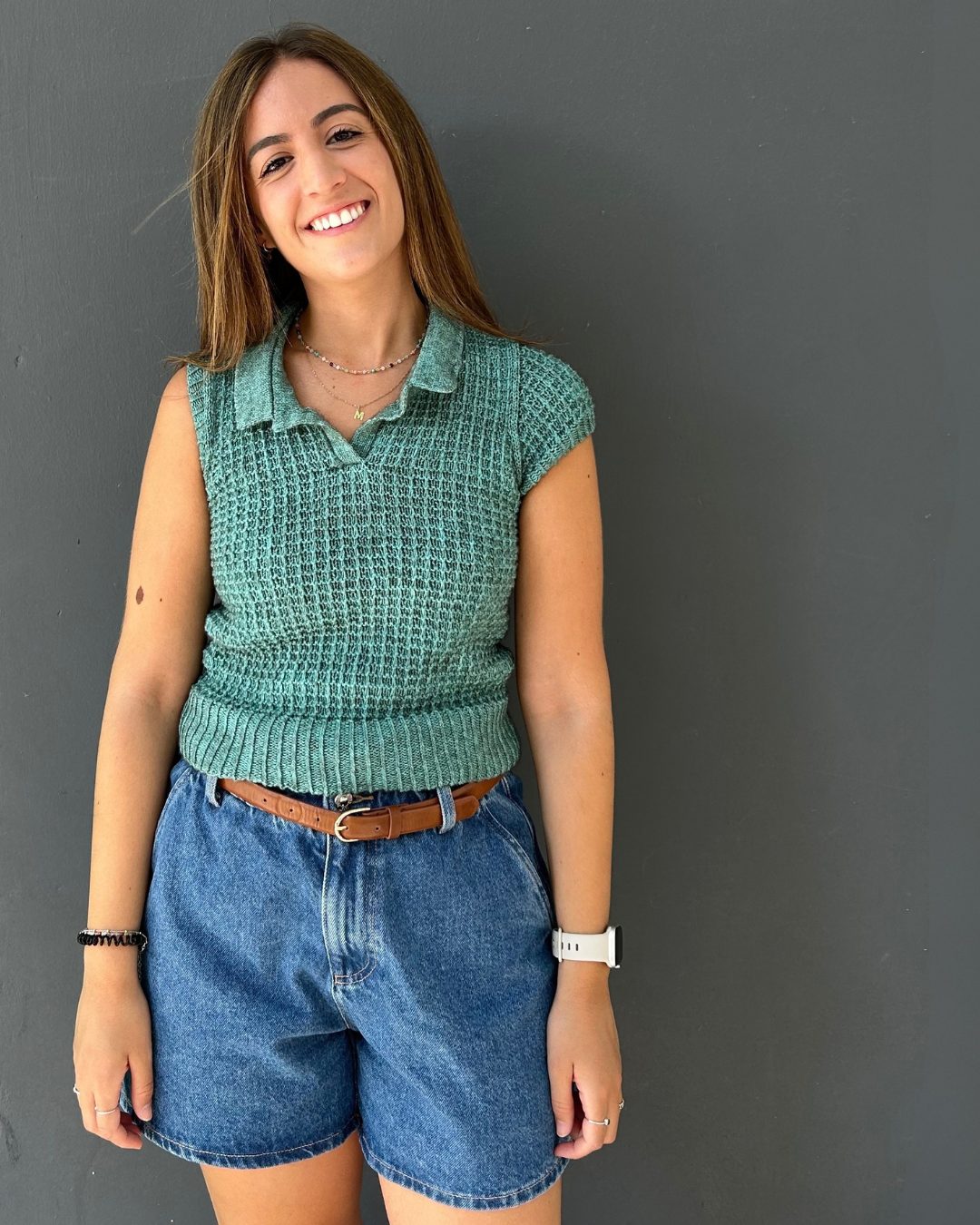
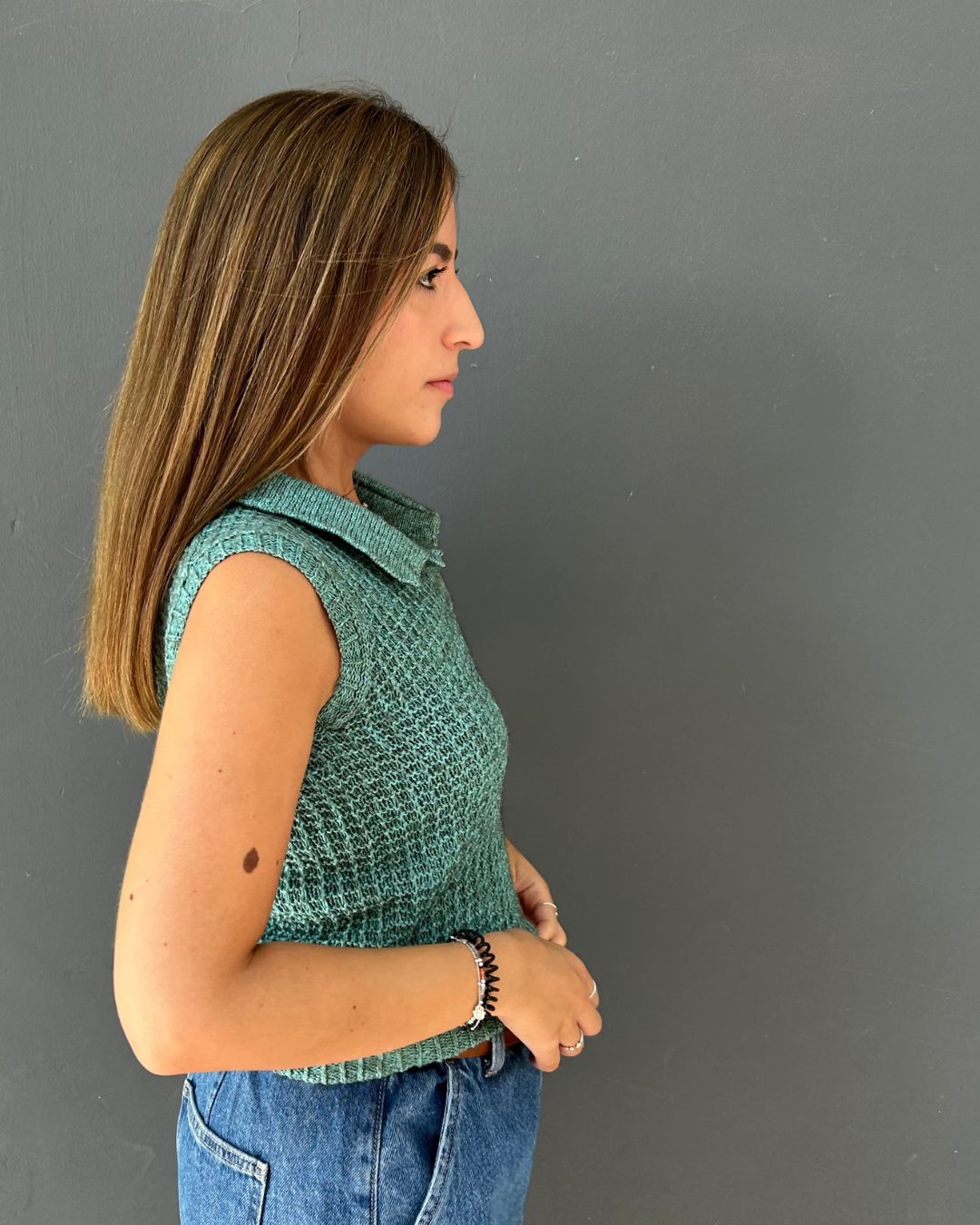



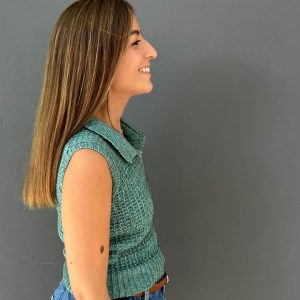
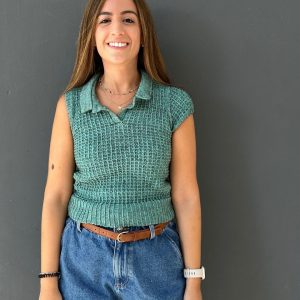
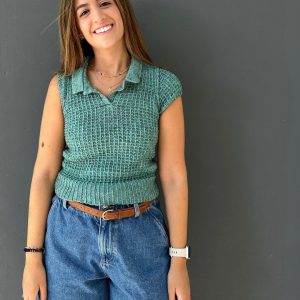
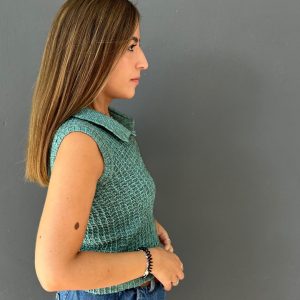
Polo Puivert Mujer


€9.68
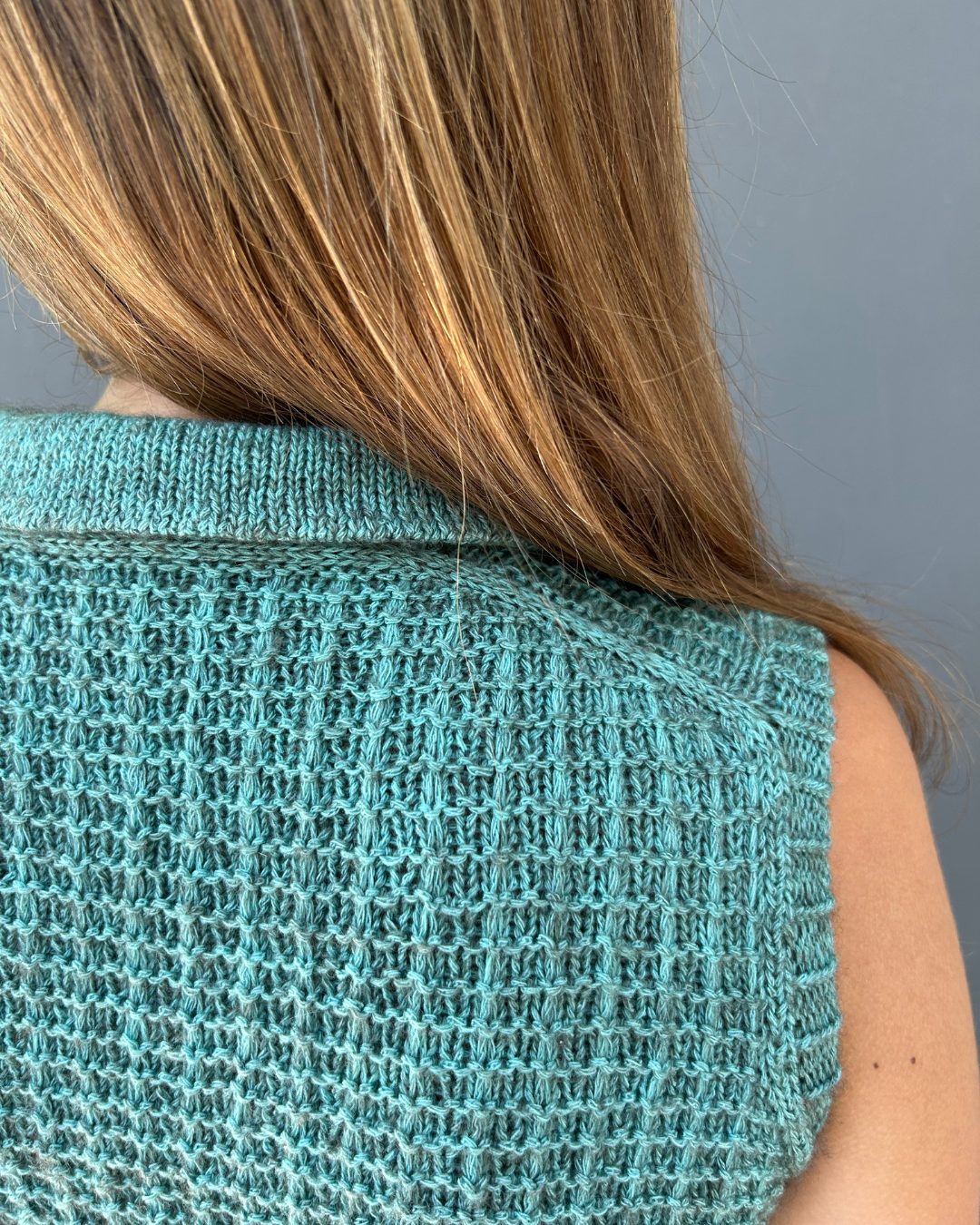
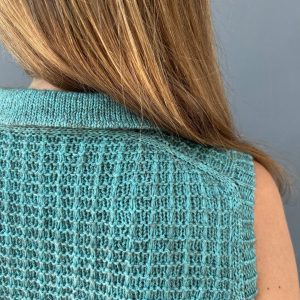
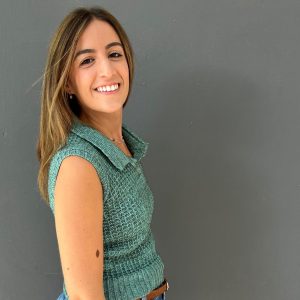
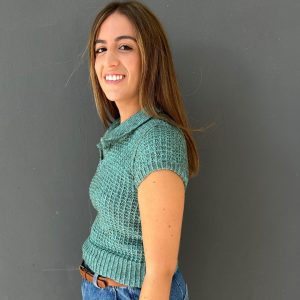
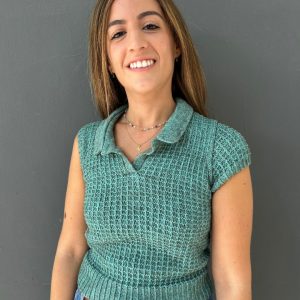
Este polo top-down sin costuras está inspirado en el encantador pueblo de Puivert, en el sur de Francia. Su textura de puntos deslizados recuerda la piedra antigua del castillo que domina el paisaje, mientras que el cuello con solapa tejido doble aporta estructura y un aire refinado. Es una prenda versátil, pensada para quienes valoran los detalles y buscan un diseño atemporal, cómodo y con carácter. Ideal tanto para llevar sola como bajo una chaqueta, Puivert es ese tipo de prenda que une lo clásico con lo contemporáneo sin esfuerzo.
DISPONIBLE EN ESPAÑOL
AVAILABLE IN ENGLISH
DISPONIBILE IN ITALIANO
Su diseño incorpora hombro inglés, manga montada y un distintivo cuello con solapa tejido en doble capa, aportando estructura y un toque sofisticado al conjunto. La construcción comienza por la espalda, trabajando en plano a partir de una lengüeta del ancho del cuello, sobre la que se levantan los puntos.
A medida que se avanza, los aumentos a ambos lados de la labor permiten dar forma a los hombros. Una vez alcanzado el ancho deseado, se continúa en recto hasta el momento de formar la sisa mediante nuevos aumentos. Los puntos se dejan entonces en espera para trabajar los delanteros por separado, empezando por el hombro izquierdo. Aquí se modela primero el escote y luego la sisa, antes de repetir el proceso en el hombro derecho.
El cuello, una de las señas de identidad del modelo, se compone de tres partes: la base, la solapa y las tapetas, todas tejidas en doble capa para un acabado impecable tanto por el derecho como por el revés. Se levantan los puntos a lo largo del borde del cuello, trabajando por fuera y por dentro de la labor para lograr ese efecto reversible y pulido. Una vez finalizado el cuello, se unen los delanteros y se completa la formación de las sisas si es necesario. Después se unen delantero y espalda para continuar el cuerpo en circular hasta el largo deseado.
Finalmente, Puivert ofrece dos opciones de acabado en las mangas: una manga montada corta y elegante o un sencillo borde, ideal para convertir el polo en un moderno chaleco. En ambos casos, bastará con levantar los puntos a lo largo del borde de las sisas. Para formar la copa de las mangas, se realizarán vueltas cortas alemanas.
HILADO
Vaya de Lang Yarns (74% algodón, 16% lana, 10% yak) (200 m/50 g) o cualquier otro hilado de grosor Sport de composición similar.
En la muestra se ha usado el color 1135.0073.
| TALLA | METROS | |
| C/Mangas | S/Mangas | |
| 1 | 500 | 450 |
| 2 | 600 | 550 |
| 3 | 700 | 650 |
| 4 | 850 | 775 |
| 5 | 1000 | 925 |
| 6 | 1200 | 1100 |
| 7 | 1400 | 1300 |
TALLAS Y MEDIDAS FINALES
1 (2: 3: 4) (5: 6: 7) para contornos de pecho de 85 (95: 105: 115) (125: 135: 145) cm.
Las medidas (en cm) son aproximadas y corresponden a la prenda terminada. Te aconsejo una holgura de 0 cm.
| TALLA | 1 | 2 | 3 | 4 | 5 | 6 | 7 |
| CONTORNO DE PECHO | 85 | 95 | 105 | 115 | 125 | 135 | 145 |
| ANCHO DE HOMBROS | 30 | 32,5 | 35 | 37 | 38,5 | 38,5 | 40 |
| PROFUNDIDAD SISA | 16 | 17 | 18,5 | 20 | 21 | 22,5 | 23,5 |
| LARGO DESDE SISA | 31 | 31,5 | 32 | 32,5 | 33 | 34 | 35 |
| LARGO TOTAL (desde el hombro) | 47 | 48,5 | 50,5 | 52,5 | 54 | 56,5 | 58,5 |
MATERIALES
- Agujas circulares talla A: 3,75 mm (o las necesarias para obtener la muestra de tensión) y cable de distintas longitudes según la sección del polo.
- Agujas circulares talla B: 2,75 mm (o 1 mm menos que las anteriores) y cable de 125 cm para la base y la solapa del cuello y los bordes del cuerpo y las mangas.
- Agujas circulares talla C: 2,25 mm (o 1,5 mm menos que la talla A) y cable 75 cm para la tapeta del cuello.
- Agujas de doble punta de 2,25 a 2,75 mm (no es muy importante el tamaño exacto de estas agujas) para la tapeta del cuello.
- Ganchillo de 3 mm (para el montaje provisional de las tapetas del cuello).
- Hilo de desecho de un color contrastante.
- Hilo de coser de un color contrastante.
- Marcadores.
- Tijeras.
- Aguja lanera.
MUESTRA DE TENSIÓN
24 p y 48 vtas en un cuadrado de 10 x 10 cm con el motivo de puntos deslizados en plano (pag. 5) con las agujas circulares de la talla A DESPUÉS de bloquear.
¡Tómate tu tiempo para hacer la muestra de tensión!
NIVEL DE DIFICULTAD Y CONOCIMIENTOS NECESARIOS
Intermedio. Debes saber hacer (encontrarás vídeos en la sección VÍDEOS DE TÉCNICAS):
- Aumentos inclinados.
- Levantar puntos.
- Montaje de lazada retorcida.
- Montaje provisional con ganchillo.
- Magic loop.
- Vueltas cortas alemanas.
- Punto Kitchener.
- Cierre Xiaowei.
This top-down seamless polo top is inspired by the charming town of Puivert, in the south of France. Its slipped stitch texture recalls the ancient stone of the castle that dominates the landscape, while the collar with double-knit lapel adds structure and a refined air. It is a versatile garment, designed for those who value details and are looking for a timeless, comfortable design with character. Ideal both to wear alone or under a jacket, Puivert is that type of garment that effortlessly unites the classic with the contemporary.
Its design incorporates an English shoulder, capped sleeves, and a distinctive collar with a double-knit lapel, adding structure and a sophisticated touch to the garment. The construction begins at the back, working flat from a tab the length of the back neck, from which stitches are then picked up.
As you progress, the increases at either side give shape to the shoulders. Once the desired width is reached, the back is continued straight until it is time to shape the armholes with more increases. These stitches are then left on hold while the fronts are worked separately, starting with the left shoulder. Here the neck is shaped first and then the armhole, before repeating the process with the right shoulder.
The neck, one of the hallmarks of the design, is composed of three parts: the base, the lapel and the plackets, all worked in a double layer for an impeccable finish both on the right side and the wrong side. Stitches are picked up along the neck edge, working both the outside and inside of the work to achieve this reversible and polished effect. Once the neck is finished, the fronts are joined, and the armhole shaping is completed if necessary. Then the front and back are joined to continue working the body in the round to the desired length.
Finally, Puivert offers two sleeve options: a short and elegant capped sleeve or a simple edging, ideal for converting the polo into a modern vest. In both cases, all that is needed to begin is to pick up stitches around the armhole edges. To shape the sleeve cap, German short rows are used.
YARN
Vaya from Lang Yarns (74% cotton, 16% wool, 10% yak) (200 m/50 g) or any other Sport weight yarn of a similar composition.
The sample shown used colour 1135.0073.
| SIZE | METRES | |
| Sleeves | No Sleeves | |
| 1 | 500 | 450 |
| 2 | 600 | 550 |
| 3 | 700 | 650 |
| 4 | 850 | 775 |
| 5 | 1000 | 925 |
| 6 | 1200 | 1100 |
| 7 | 1400 | 1300 |
SIZES AND FINAL MEASUREMENTS
1 (2: 3: 4) (5: 6: 7) for a chest circumference of 85 (95: 105: 115) (125: 135: 145) cm.
These measurements (in cm) are estimates and correspond to the finished item. I would advise choosing a size with 0 cm ease.
| SIZE | 1 | 2 | 3 | 4 | 5 | 6 | 7 |
| CHEST CIRCUMFERENCE | 85 | 95 | 105 | 115 | 125 | 135 | 145 |
| SHOULDER WIDTH | 30 | 32.5 | 35 | 37 | 38.5 | 38.5 | 40 |
| ARMHOLE DEPTH | 16 | 17 | 18.5 | 20 | 21 | 22.5 | 23.5 |
| LENGTH FROM ARMHOLE | 31 | 31.5 | 32 | 32.5 | 33 | 34 | 35 |
| TOTAL LENGTH (from the shoulder) | 47 | 48.5 | 50.5 | 52.5 | 54 | 56.5 | 58.5 |
MATERIALS
- Circular needles size A: 3.75 mm (or size needed to get gauge) and cables of different lengths for the different sections of the polo.
- Circular needles size B: 2.75 mm (or 1 mm smaller than the needles above) and a cable of 125 cm for the base and the lapel of the neck and the edgings of the body and sleeves.
- Circular needles size C: 2.25 mm (or 1.5 mm smaller than size A) and a cable of 75 cm for the neck plackets.
- Double-pointed needles of between 2.25 and 2.75 mm (the exact size of these is not important) for the neck plackets.
- Crochet hook of 3 mm (for the provisional cast-on of the neck plackets).
- Waste yarn in a contrasting colour.
- Sewing thread in a contrasting colour.
- Stitch markers.
- Scissors.
- Tapestry needle.
GAUGE
24 sts x 48 rows gives a square of 10 x 10 cm in the slipped stitch pattern worked flat (p.5) using the size A circular needles AFTER blocking.
Take your time to make a gauge swatch!
DIFFICULTY LEVEL AND NECESSARY KNOWLEDGE
Intermediate. You should know how to do (you will find videos in the TECHNIQUE VIDEOS section):
- Leaning increases.
- Picking up stitches.
- Backwards loop cast-on.
- Provisional crochet cast-on.
- Magic loop.
- German short rows.
- Kitchener stitch.
- Xiaowei bind-off.
Questa polo top-down e senza cuciture si ispira all’affascinante città di Puivert, nel sud della Francia. La sua texture, creata da maglie passate, ricorda l’antica pietra del castello che domina il paesaggio, mentre il collo, con il suo risvolto lavorato con la tecnica del double-knit, aggiunge struttura e un tocco raffinato. È un capo versatile, creato per chi sa apprezzare i dettagli e cerca un modello senza tempo, comodo e con personalità. Ideale da indossare da solo oppure sotto una giacca, Puivert è un capo che, con disinvoltura, è al tempo stesso classico e contemporaneo.
La sua costruzione incorpora una spalla all’inglese, maniche ad aletta e un collo molto caratteristico lavorato con la tecnica del double-knit. La lavorazione comincia dal dietro, che si lavora in piano partendo da un avvio garter tab che prende la lunghezza del dietro del collo e dal quale poi vengono raccolte le maglie.
Via via che si lavora, gli aumenti su entrambi i lati creano le spalle. Una volta raggiunta la larghezza desiderata, si continua a lavorare il dietro in piano fino al punto in cui si sagomano i giromanica con alcuni aumenti. Queste maglie sono poi lasciate in attesa mentre si lavorano separatamente i due davanti, cominciando con la spalla sinistra. Il collo è sagomato per primo, poi si passa al giromanica, prima di ripetere il processo anche per la spalla destra.
Il collo, una delle particolarità di questo modello, è composto di tre parti: la base, il risvolto e l’abbottonatura, tutte lavorate in double-knit per una finitura impeccabile sia sul davanti sia sul dietro del lavoro. Si raccolgono poi le maglie lungo il bordo dello scollo, lavorando sia la parte interna sia la parte esterna per ottenere un risultato che è al tempo stesso reversibile e ben rifinito. Una volta terminato il collo, si uniscono i due davanti e si completa, se necessario, la sagomatura del giromanica. Poi si uniscono il davanti e il dietro per continuare a lavorare il corpo in tondo fino alla lunghezza desiderata.
Infine, Puivert offre due opzioni per le maniche: una manica ad aletta, corta ed elegante, oppure un semplice orlo, ideale per trasformare questa polo in un gilet moderno. In entrambi i casi, basta raccogliere le maglie intorno ai bordi del giromanica. Per sagomare le maniche ad aletta, si usano i ferri accorciati alla tedesca.
FILATO
Vaya di Lang Yarns (74% cottone, 16% lana, 10% yak) (200 m/50 g) o qualunque altro filato di spessore Sport con una composizione simile.
Per l’esempio mostrato è stato usato il colore 1135.0073.
| TAGLIA | METRI | |
| Con le maniche | Senza maniche | |
| 1 | 500 | 450 |
| 2 | 600 | 550 |
| 3 | 700 | 650 |
| 4 | 850 | 775 |
| 5 | 1000 | 925 |
| 6 | 1200 | 1100 |
| 7 | 1400 | 1300 |
TAGLIE E MISURE FINALI
1 (2: 3: 4) (5: 6: 7) per una circonferenza busto di of 85 (95: 105: 115) (125: 135: 145) cm.
Le misure qui indicate (in cm) sono approssimate e si riferiscono al capo finito. Ti suggerisco di lavorare con un agio di 0 cm.
| TAGLIA | 1 | 2 | 3 | 4 | 5 | 6 | 7 |
| CIRCONFERENZA BUSTO | 85 | 95 | 105 | 115 | 125 | 135 | 145 |
| LARGHEZZA SPALLE | 30 | 32.5 | 35 | 37 | 38.5 | 38.5 | 40 |
| ALTEZZA GIROMANICA | 16 | 17 | 18.5 | 20 | 21 | 22.5 | 23.5 |
| LUNGHEZZA DAL GIROMANICA | 31 | 31.5 | 32 | 32.5 | 33 | 34 | 35 |
| LUNGHEZZA TOTALE (dalla spalla) | 47 | 48.5 | 50.5 | 52.5 | 54 | 56.5 | 58.5 |
MATERIALI
- Ferri circolari misura A: 3.75 mm (o nella misura necessaria per ottenere la tensione desiderata) e cavi di diverse lunghezze per le diverse sezioni della polo.
- Ferri circolari misura B: 2.75 mm (o 1 mm più piccoli di quelli della misura A) e un cavo da 125 cm per la base e il risvolto del collo e gli orli del corpo e delle maniche.
- Ferri circolari misura C: 2.25 mm (o 1.5 mm più piccoli della misura A) e un cavo da 75 cm per l’abbottonatura del collo.
- Ferri a doppia punta tra i 2.25 e i 2.75 mm (non è importante che la misura sia esatta) per l’abbottonatura del collo.
- Uncinetto da 3 mm (per l’avvio provvisorio dell’abbottonatura del collo).
- Filato di scarto in colore contrastante.
- Filo da cucito in colore contrastante.
- Marcapunti.
- Forbici.
- Ago da lana.
TENSIONE
24 m x 48 ferri = 10 x 10 cm nel motivo a maglie passate lavorato in piano (p.5) con la misura A dei ferri circolari misurato DOPO il bloccaggio.
Prenditi il tempo per fare un campione!
LIVELLO DI DIFFICOLTÀ E COMPETENZE RICHIESTE
Intermedio. Dovresti sapere come fare (troverai dei video nella sezione VIDEO DELLE TECNICHE):
- Aumenti intercalati.
- Raccogliere le maglie.
- Avvio a catenella.
- Avvio provvisorio all’uncinetto.
- Magic loop.
- Ferri accorciati alla tedesca.
- La cucitura invisibile o Kitchener stitch.
- La chiusura Xiaowei.
Solo los usuarios registrados que hayan comprado este producto pueden hacer una valoración.
Productos relacionados


Cuellos


Chales


Chales


Jerséis


Chales


Estola


Jerséis


Chales
Valoraciones
No hay valoraciones aún.